This is the second post in our series on real-world augmented reality (AR) and virtual reality (VR). In Part 1 we looked at Google’s AR tools, flight simulators and fighter-jet HUDs. Here we cover three areas where the technology has changed the most since we first wrote this: cars, smart glasses and healthcare. We have updated each section for 2026.
Quick answer: Beyond gaming, AR and VR are used in cars (AR head-up displays, VR design, AR quality checks on the assembly line), in smart glasses (hands-free guidance, translation and AI assistants) and in healthcare (surgical training, pain therapy and rehabilitation). The biggest shift since 2020 is the pairing of AR and VR with AI.
AR in the automobile industry
Heads-up displays are going mainstream
In 2020 we pointed to BMW and Mercedes systems that showed speed, fuel and navigation prompts on the windshield. Today the AR head-up display (AR-HUD) is a headline feature across the industry. Recent examples include Audi’s AR-HUD, which won an industry award in January 2026 for the A6 e-tron and Q6 e-tron, Lucid’s partnership with Basemark on an AR-HUD for the Gravity SUV, and Xpeng and Huawei’s joint AR-HUD for the G7. Market analysts agree that AR-HUDs are the fastest-growing HUD segment, though their published market sizes vary widely.
The idea is the same as before: overlay navigation arrows, lane guidance and hazard warnings directly on the road ahead, so the driver never has to look away. The difference is that this is moving from luxury models into mid-range vehicles.
Seeing through the car
Blind spots remain a real safety problem. Researchers in Japan developed a system that projects video of the blind spots onto the car’s pillars, in effect making them transparent. Range Rover’s “transparent bonnet” view, which shows the ground under the front wheels, is especially useful off-road.
Designing and building cars in VR
Car makers use VR and AR well before a vehicle reaches the road:
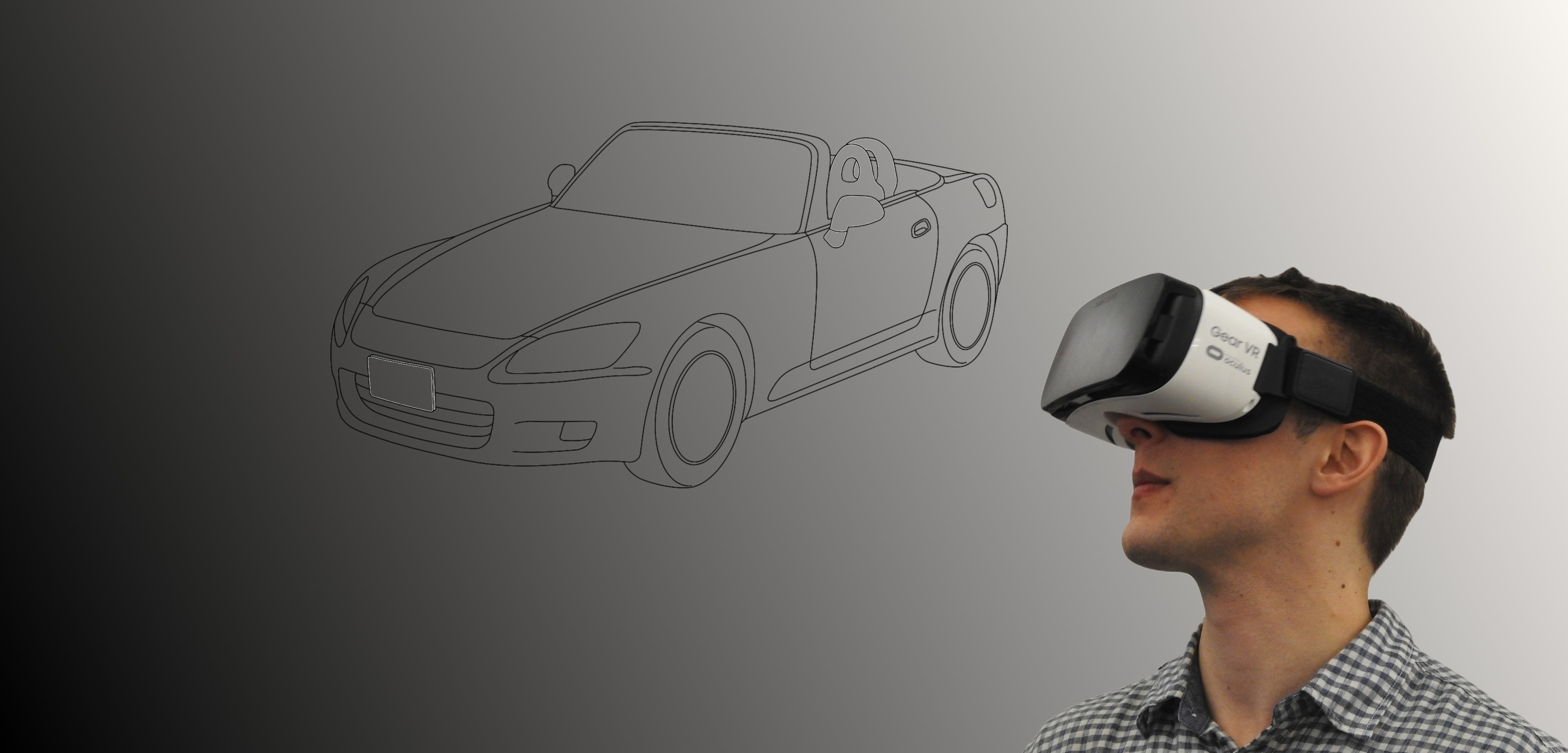
- Design: London studio Seymourpowell uses HTC Vive headsets so designers can draw and walk through car concepts in 3D. Ford used the VR tool Gravity Sketch to produce designs in about 40 hours that would normally take months in traditional CAD. Fewer physical prototypes mean faster, cheaper iteration.
- Quality control: Porsche uses tablet-based AR to overlay the CAD model onto a finished car, so bumps and uneven gaps stand out immediately.
- Autonomous cars: as driverless technology matures, AR is being explored as a way to reassure and entertain passengers, for example by showing what the car sees on the windshield.
AR and smart glasses
In 2020 this section was a wish list: Google Glass Enterprise Edition 2, which helped factory workers follow assembly steps hands-free, and North’s Focals, which looked like ordinary glasses. Both have since been discontinued. Google ended Glass Enterprise sales, and North was acquired by Google in 2020 and stopped selling Focals. The category itself has not gone away. It has moved on:
- AI-first smart glasses. Meta’s Ray-Ban line now includes models with a built-in display, controlled with a wrist-worn Neural Band that reads muscle signals. They handle messages, translation and visual search.
- Android XR. Google’s XR platform brings its Gemini assistant to headsets such as Samsung’s Galaxy XR and to upcoming glasses from Google’s hardware partners.
- Spatial computing. Apple Vision Pro, Meta Quest and Snap’s Specs are being tested in enterprise pilots for training, remote assistance and design reviews.
The pattern is clear. The glasses of 2020 added a screen. The glasses of 2026 add an assistant that can see what you see. Battery life, weight and privacy remain the biggest open problems.
VR in healthcare
Surgical training
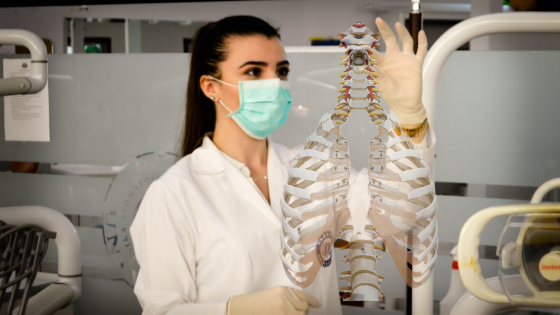
Surgeons cannot wait for rare cases to turn up in order to practise them. Platforms such as Osso VR let them rehearse procedures as many times as needed with no patient at risk, and score their performance objectively. Osso has reported a 230% improvement in surgical performance in a validation study, and it now offers a large library of procedures across specialities. Tools such as ImmersiveTouch turn flat CT and MRI slices into a 3D model so surgeons can plan and rehearse an operation before they scrub in.
From pilot projects to regulated therapy
The biggest change since 2020 is regulatory. The FDA has authorized VR as a prescription treatment: AppliedVR’s RelieVRx is a program for chronic lower back pain. One industry review counts 104 AR/VR entries on the FDA’s medical device list by December 2025, up from 39 in 2022. A 2025 meta-analysis of 13 studies also found that VR significantly reduced pain intensity during procedural and non-procedural care, in both adults and children.
Rehabilitation and care
VR makes repetitive physiotherapy less of a chore and lets patients do it at home, on a virtual beach instead of a hospital wing. It is also used for cognitive rehabilitation after stroke, for helping children with autism practise everyday situations such as crossing a street (Floreo), and for giving care-home residents a virtual nature walk.
The constraints we noted in 2020 still apply: headsets can be bulky, long sessions can cause motion sickness, and most systems cover sight and sound but not touch or smell.
What comes next: AR and VR meet AI and IoT
The most useful AR and VR experiences in 2026 are not standalone. They are connected:
- AI makes the experience adaptive. Computer vision recognises objects and spaces, and a multimodal assistant can explain what you are looking at, translate a sign or coach a trainee through a procedure.
- IoT makes it live. When machines, vehicles and building systems stream sensor data, AR can show a technician live temperature, vibration or pressure on the equipment itself. This is the basis of digital twins and of predictive maintenance on the factory floor. See how this plays out in our post on Industry 4.0 and in how IoT is changing our world.
- Faster networks help. Low-latency connectivity is what makes remote AR assistance and cloud-rendered VR practical. We cover that in Impact of 5G Technology.
Frequently asked questions
What are the main applications of AR and VR beyond gaming? The main ones are healthcare (surgical training, pain therapy, rehabilitation), automotive (AR head-up displays, VR design, AR quality control), manufacturing and field service (hands-free guidance on smart glasses), education and training (flight and driving simulators) and retail (virtual try-on and product placement).
How is AR used in cars? AR head-up displays overlay navigation, lane guidance and hazard alerts on the windshield. Manufacturers also use AR on the assembly line to check parts against CAD models.
Is VR used in real medical treatment? Yes. The FDA has authorized VR therapeutics such as RelieVRx for chronic lower back pain, and VR is widely used to train surgeons and support rehabilitation.
What is the difference between AR and VR? AR adds digital information on top of the real world, while VR replaces the real world with a fully virtual one. Mixed reality and spatial computing blend the two.
Are smart glasses worth it for businesses in 2026? They are worth piloting for hands-free guidance, remote support and training. Many teams start on headsets or phone-based AR and move to lighter glasses as the hardware matures.
Build the intelligence behind immersive experiences
AR and VR are only the interface. The real value comes from the AI that interprets what the user sees and the connected data that makes it live. If you are planning an immersive product, such as an AR maintenance assistant, a VR training platform or a smart-glasses app, Nuventure can help you build what sits behind it. Explore our AI application development services to see how we design, train and deploy AI solutions, or talk to us about custom IoT solutions for the connected-device side.
Missed the first half of the series? Read Part 1: Applications of AR and VR other than gaming and Snapchat.