Probably the best part about Pokemon GO and the Snapchat filters (more than their cuteness) was how the two used a seemingly difficult or icky(I’m referring to the motion sickness) technology into something mainstream and fun. Up until a decade or two years ago, AR and VR was more of science fiction but these days, it’s everywhere.
Have a look at some of the areas where AR and VR are being used. Odds are you may have seen or used at least some of them, you probably didn’t notice it.
Quick answer: what are AR and VR used for beyond gaming?
Beyond gaming and social filters, AR and VR are used for pilot and driver training, visual search and navigation (Google Lens, Live View), factory work instructions and quality checks, surgical training and therapy, and, increasingly, AI-powered smart glasses. Augmented reality (AR) overlays digital information on the real world, while virtual reality (VR) replaces it with a simulated one.
Google’s AR and VR: what survived and what didn’t
In 2020 this section read like an advert for Google. Reality has been more mixed, so let’s separate what is still going strong from what has been retired.
Still going strong: Google Lens and Live View. Google Lens started as an impressive piece of OCR that could read text, overlay translations, identify plants and animals, and search for objects. It is now powered by Gemini, and Google has said it handles around 20 billion visual searches a month. Live View in Google Maps still superimposes walking directions onto your camera feed, and the camera can also be used to explore nearby places. The idea we teased in 2020, placing a lamp in your living room before you buy it, has since become a routine part of AR shopping.
Retired: the headsets and creative tools. Google stopped selling its Cardboard and Daydream headsets in 2019 and open-sourced Cardboard. Tilt Brush stopped active development and was open-sourced in January 2021, and Poly and Expeditions were shut down on June 30, 2021, with some Expeditions content moved into Google Arts & Culture. Expeditions had been used by millions of students to take virtual field trips from the classroom, a use case that now lives on in other education platforms.
Back again: Android XR. Google’s second attempt is built around AI. Android XR is its operating system for headsets and glasses, and Samsung’s Galaxy XR headset was the first device to ship. At Google I/O 2026, Google confirmed that Gemini-powered Android XR glasses with Warby Parker and Gentle Monster are due in fall 2026, and Xreal has said its Project Aura AR glasses will arrive before the end of the year.
One naming note: Facebook acquired Oculus in 2014, and the headsets are now sold as Meta Quest. They remain the most widely used consumer VR hardware.
AR and VR at high speeds: simulators and heads-up displays
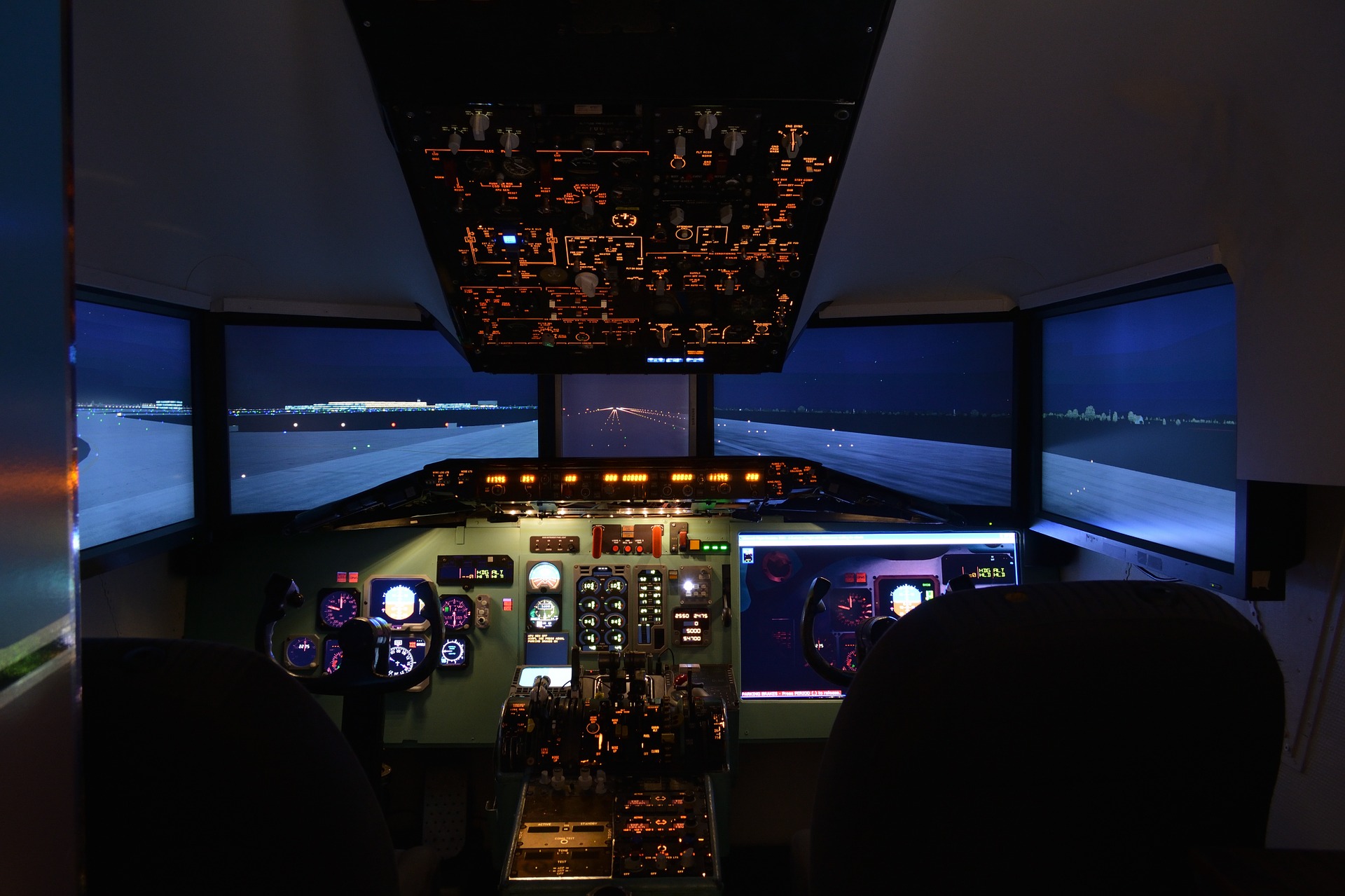
Virtual reality is much older than the headset. Flight simulators have trained pilots for decades. Edward Link’s “Link Trainers” used an electromechanical system to mimic how an aircraft’s control surfaces moved, and modern full-flight simulators are still among the most expensive and valuable training tools in aviation, costing millions of dollars to build and hundreds of dollars an hour to run. Companies pay that because simulators let pilots practise engine failures and other emergencies safely, and they spare real aircraft from wear and tear.
For fighter pilots the stakes are higher. Advanced simulators placed in large centrifuges can recreate the G forces of up to 9 g, helping pilots prepare to stay conscious in flight.
Simulators are not just for pilots. They train novice drivers, who can make their first mistakes without real-world consequences, and F1 teams use them to test components and setups within the sport’s limits on real-car testing.
The key point is that the visuals are only half of it. Simulators sit on motion platforms that recreate how a vehicle actually feels. Increasingly, that physical realism is being combined with VR and mixed-reality headsets, and with AI that adapts the scenario to the trainee.
Augmented reality has an equally long history in the cockpit. Heads-up displays have long been standard in fighter jets, putting an artificial horizon and key flight data in front of the pilot so they never have to look down at gauges. It is the same idea as the navigation arrow in Live View, just decades earlier.
What has changed since 2020: five trends to watch
1. AI is now the engine of AR. AR used to mean overlaying graphics on a camera feed. Today it means understanding what the camera sees and answering questions about it. Lens and Gemini-powered glasses both work this way, and it is why “AI glasses” is now the label most manufacturers prefer.
2. Smart glasses are the breakout product. EssilorLuxottica’s CEO said more than 7 million Ray-Ban and Oakley Meta AI glasses were sold in 2025. Counterpoint Research reported that global AI glasses shipments grew 263% year over year in the first half of 2026. Apple is reportedly preparing its own glasses for 2027.
3. Headsets have split into two markets. Affordable headsets like Meta Quest keep finding buyers for gaming, fitness and training, while premium mixed-reality headsets have struggled. Apple’s Vision Pro has reportedly sold well below expectations, which helps explain the industry’s pivot toward lighter glasses.
4. Healthcare is the most proven enterprise use. VR surgical training and VR therapy have moved beyond pilots. The FDA’s list of AR and VR medical devices grew from 39 entries in 2022 to 104 by December 2025, and prescription VR programs such as RelieVRx are FDA-authorized for chronic lower back pain. We cover surgical training, physiotherapy and cognitive rehabilitation in Part 2 of this series.
5. Industry is pairing AR with live machine data. Google discontinued Glass Enterprise Edition in 2023, but the idea behind it, hands-free work instructions and remote expert support on the factory floor, has outlived the product. The same goes for the AR quality checks Porsche uses on its production line. What makes these tools truly useful is the data behind the overlay: sensor readings, equipment history and models that flag problems early.
Frequently asked questions
What are the main applications of AR and VR beyond gaming? The biggest are training and simulation (aviation, driving, surgery), visual search and navigation, industrial work instructions and quality control, healthcare therapy and rehabilitation, design and prototyping, and retail previews.
What is the difference between AR and VR? AR adds digital information to the world you can still see, for example directions on your camera view. VR replaces your surroundings with a fully simulated environment. Mixed reality blends the two so digital objects can interact with real ones.
Are smart glasses replacing VR headsets? Not replacing, but outpacing them in growth. AI glasses are lightweight, cheap and used all day, while headsets remain better for immersive training, design and gaming.
Keep reading
This is only half the picture. In Applications of AR and VR Beyond Gaming and Snapchat: Part 2 we look at AR in cars, AR glasses, and how VR is changing surgery, physiotherapy and care for people with autism.
From immersive demos to connected, intelligent operations
Every AR overlay on a factory floor and every VR training scenario is only as useful as the data behind it. Live equipment readings, sensor history and models that predict what is about to fail are what turn a clever headset demo into something operations teams rely on every day.
That is the layer Nuventure builds. Our full cycle IoT development services cover everything from device firmware and connectivity to cloud integration and AI-powered dashboards, and our predictive analytics and AIoT work helps teams spot equipment problems before they cause downtime. If you are planning an AR, VR or smart-glasses project that depends on real-time machine data, talk to our team.