Key takeaways
- Social media platforms act as the world’s biggest content moderators, and every moderation choice trades free speech against harm.
- Recommendation algorithms optimize for engagement, which can create filter bubbles and echo chambers.
- Since 2020 the debate has shifted from “should platforms moderate?” to “who checks the moderators?”, with crowd-sourced Community Notes, tougher regulation and mandatory AI-content labels.
- Generative AI has made fake content cheaper to produce than ever, so detection and labelling now matter as much as removal.
Ever since 2004, social media has shaped public debate
Ever since Facebook launched in 2004, social networks have become a major part of society. Selfies, memes, debates and discussions are a daily routine for a large part of the population. What used to happen between a few friends over a pint or two (the good, the bad and the ugly) now happens in public, at global scale.
As the major content moderators of the free world, social media platforms hold huge power. They have been compared to the propaganda machines of the 21st century, and they can influence the fate of important events. A well-known example is the 2016 US presidential election, where Russian-linked misinformation campaigns tried to sway the outcome. Effective policing of social media content is not easy, and it comes down to several competing factors.
Social media: the last bastion of free speech? Or not?
The rise of social media raised hard questions about free speech and censorship, and people of every political background have asked them. Before social platforms, publishing online required technical know-how and reach was limited. Facebook changed the dynamics of interaction: ideas spread rapidly, alliances formed over long distances, and anonymity through fake profiles exposed some uncomfortable aspects of human nature.
Platforms have long been pressed to remove content deemed unfit. Clearly dangerous content from fringe groups is easy to identify, but many decisions are not, and every call to allow or remove a post sparks debate about what free speech protects. Even the definition of hate speech is contested. In my experience, people across the political spectrum have supported and opposed free speech on a case-by-case basis.
What are filter bubbles, and why do they matter?
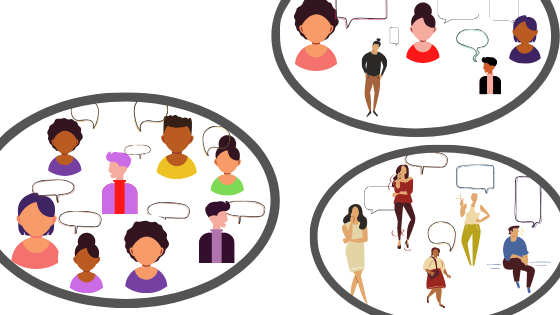
Platforms are designed to keep you using them, so their algorithms show you content that engages you and hide content you’d rather not see. The result is the filter bubble: you rarely meet ideas that challenge your own, which builds echo chambers, strengthens conspiracy theories and deepens prejudice. Fringe groups that once couldn’t find enough members can now reach the whole world, a problem that sits at the heart of algorithmic bias and recommendation ethics today.
Who do you want on your platform?
A key design decision for any social platform is the audience it wants. Reddit relies on dedicated, admin-moderated communities, each catering to specific interests. Facebook, by contrast, mixes the entire world into one feed. Because platforms earn most of their revenue from advertising, they are pushed to maximize reach, and that makes consistent moderation policies hard to maintain.
Alternative facts: fake news, then and now
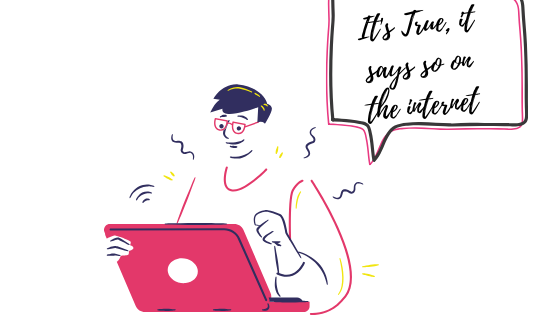
Platforms are called out daily for failing to stop fake news. With millions of posts uploaded every day, misinformation spreads quickly, and it has real-world consequences: scams, health myths and even election interference.
In 2020, tech giants joined forces to fight coronavirus misinformation, and Facebook declined to remove political ads containing falsehoods while Twitter banned political ads outright. That episode showed how business incentives shape ethical choices. The same tension has only grown since.
What has changed since 2020
1. From fact-checkers to Community Notes
Meta ended its professional fact-checking program in the US on April 7, 2025, replacing it with a crowd-sourced Community Notes model similar to X’s. Unlike the old system, notes do not reduce the reach of a flagged post. Supporters say this reduces bias and over-enforcement; critics, including fact-checking networks, say crowd-sourcing is slower and less effective. In September 2026, Meta’s Oversight Board urged the company not to replace fact-checking with Community Notes, and policy analysts flagged human-rights risks in a global rollout. The debate over who should decide what is true remains open.
2. Regulators are now enforcing
The EU’s Digital Services Act (DSA) requires very large platforms to assess and mitigate systemic risks such as misinformation and algorithmic amplification. In December 2025 the European Commission issued its first DSA non-compliance fine, €120 million against X, over issues including its verification badges, ad transparency and data access. DSA penalties can reach up to 6% of global turnover. The law is also contested: some US critics argue it pressures platforms to over-remove lawful speech, which keeps the free speech question very much alive.
3. Generative AI, deepfakes and mandatory labels
AI now makes realistic fake images, audio and video cheap to produce. Regulators have responded:
- India: the IT Rules amendments effective February 20, 2026 require prominent labelling of AI-generated content and much faster takedowns (as little as three hours for certain content, according to press reports).
- European Union: from August 2, 2026, the EU AI Act’s transparency rules require deepfakes and AI-manipulated material to be identified.
Platforms can no longer behave as passive pipes. They need systems that detect, label and explain, at scale.
4. Your data is still the product
Mis-management of user data remains a core concern. Profiling people by what they watch and search is a main revenue source, which is why “if you’re not paying for the product, you are the product” still rings true.
Frequently asked questions
Is social media really a platform for free speech? Only partly. Social platforms are private companies that set their own rules, and they must also comply with local laws. Free speech protections vary by country, so what is allowed differs between platforms and regions.
Why is content moderation an ethical dilemma? Because removing harmful content risks silencing legitimate speech, while leaving it up risks real-world harm. Platforms also have a commercial incentive to keep engagement high.
What is a filter bubble? A filter bubble is a personalised feed that mostly shows you content matching your existing views, because recommendation algorithms optimize for engagement. It can reinforce echo chambers and misinformation.
How are platforms fighting fake news and deepfakes in 2026? Through a mix of community-based tools like Community Notes, professional fact-checking, AI detection and mandatory AI-content labels required by laws such as the EU AI Act and India’s IT Rules.
Where this leaves product teams
Every ethical dilemma above is ultimately a design decision: what an algorithm optimizes for, how content is labelled, who can appeal a decision and how data is handled. Responsible AI, with human oversight, transparency and explainable models, is no longer optional for anyone building digital products.
If you’re building or modernising an AI-driven product and want it to be both effective and accountable, Nuventure’s AI development services can help you design and deliver practical AI solutions with these safeguards in mind. Talk to our AI development team about your idea.
Continue the series
Social media is only one side of the story. Connected devices raise just as many questions about privacy, always-on microphones and over-the-air updates that can change a product after you’ve bought it.
Next: Ethical Dilemmas of Modern-Day Tech: Part 4, smart devices, privacy and planned obsolescence →
This is part three of a series on the ethical dilemmas created by modern technology. Read the first part and the second part.
Who do you want on your platform?
An important aspect while developing a social media website is the type of audience; the kind of people you want on your website. Some platforms, like Reddit, have dedicated subreddits moderated by admins and as such welcomes people of all demographics and interests. But as the various subreddits show, they’re all catered to very specific interests and are carefully moderated to remove content not suitable for the specific Reddit. On Facebook, the entire world, people from all different backgrounds are mixed into a soup. Even though groups exist, the conversations are not limited to groups. Social media platforms earn most of their revenue from marketing and to be really successful, they’ll want to bring as many people as possible. And that includes everyone from your standard-issue Karen to a neo-Nazi. It’s no wonder that facebook’s content moderation policies appear so arbitrary.
Alternative facts
Globally content platforms are being called out every day for failing to fight fake news. With free to use content platforms such as Facebook and Instagram producing millions of pictures and content daily, fake news spreads at an alarming rate. Fake news has real-world consequences(besides the uncle who posts about the fruit juice with AIDS), leading people to fall for scams and maybe even change the outcome of elections.
With the recent outbreak about the coronavirus, Google and Facebook have been working overtime to fight fake news. They really can’t afford to have a fake news crisis during a global pandemic, as more and more countries are planning to enforce reforms to curb big tech.
But a recently announced policy of Facebook has shown the ethical compromises that tech companies often make to increase their revenue. Facebook made it clear that it will not remove political ads showing fake news. Essentially meaning that if I am a politician I can lie about my opponent in a Facebook ad. While Facebook claims that it is in the interest of free speech and that it lets the users decide, Twitter has banned political ads outright and Google has announced that it will not allow targeted political ads.
The (mis)management of user data could be argued as a key point of concern for all social media companies. Indeed, the profiling of individuals based on the content they view and the searches they’ve made is one of the main revenue generators for social media companies and search engines. They show exactly how “if you’re not paying for a product, you are the product”.
This is the third part of series on different ethical dilemmas created by modern day tech. Click here to read the previous part, and here to read the first part.
Stay tuned for the next part