Artificial intelligence is no longer a distant concept. It is embedded in manufacturing, healthcare, finance and even the way decisions are made in the boardroom. But before sprinting toward the next breakthrough, it is worth stepping back.
Understanding the evolution of artificial intelligence is not an academic exercise. It shows how innovation has unfolded, why certain approaches succeeded or failed and how cautious optimism can steer future growth. Here is what Nuventure, one of the best AI app development companies, says about why it pays to look back before you leap.
History of AI timeline: from idea to reality
The evolution of artificial intelligence moves through a few key stages:
- Mid-20th century: the roots of AI trace back to early computational theories. Alan Turing asked a simple but profound question, can machines think?, and his ideas laid the groundwork for the field.
- 1956: at the Dartmouth Conference, the term “artificial intelligence” was formally coined and a scientific community dedicated to building intelligent machines began to take shape.
- Cycles of optimism and stagnation: early years saw bursts of optimism followed by periods of stagnation, known as the AI winters.
- The deep learning era: today’s AI is driven by deep learning, massive data and computational power that was unimaginable two decades ago. Architectures like transformers have enabled tools that generate text, interpret images and assist in complex decision-making.
Together, these stages show how incremental steps, when built responsibly, create exponential impact.
What are AI winters?
AI winters are periods when funding, interest and progress in artificial intelligence slowed because expectations had outpaced what the technology could deliver. The so-called AI winters are a reminder that innovation is seldom linear and that cycles of hype and recalibration are part of how technology matures.
What can leaders learn from the history of AI?
The most valuable lesson from AI’s history is the importance of long-term vision paired with practical patience. Here are the key takeaways:
- Ground innovation in utility first. Early rule-based systems and symbolic reasoning were promising but limited in real-world impact. Only when AI models could learn from data did they begin to scale across industries. Innovation should be grounded in utility before it scales to transformation.
- Expect cycles of uncertainty. No breakthrough arrives in a straight line. Leaders who understand this can temper expectations while keeping up steady investment in learning and experimentation.
- Build resilience. Organizations that thrive amid uncertainty treat innovation as iterative. They prototype, measure, adapt and scale in controlled stages, much as AI research itself progresses.
- Respect the human impact. Earlier industrial revolutions brought fear and resistance, and today’s debates on job displacement, privacy and algorithmic bias echo them. One recent cultural conversation even compares early 19th-century Luddites with modern reactions to AI. The lesson is not to reject innovation but to balance progress with purpose.
How AI, IoT and robotics have co-evolved
Research mapping the growth of AI, robotics and the Internet of Things shows that these technologies have not evolved in isolation. Over the last two decades they have co-evolved, influencing each other’s development and enabling integrated solutions that were previously unthinkable.
This co-evolution points to a broader truth: breakthroughs rarely happen within the boundaries of a single domain. The future will belong to organizations that connect the dots across technology, business models, human behavior and ethics.
AI strategy for industrial leaders
A sound AI strategy for industrial leaders starts with understanding innovation cycles, then working with experienced partners to navigate them. The history of AI is full of cycles of discovery, experimentation, disappointment and renewal. The current state, where models assist with diagnosis, drive logistics and augment human decision-making, is the result of several rounds of refinement.
Working with an experienced AI app development company like Nuventure can help organizations move through these cycles more effectively, bringing technical expertise and iterative development practices to complex projects.
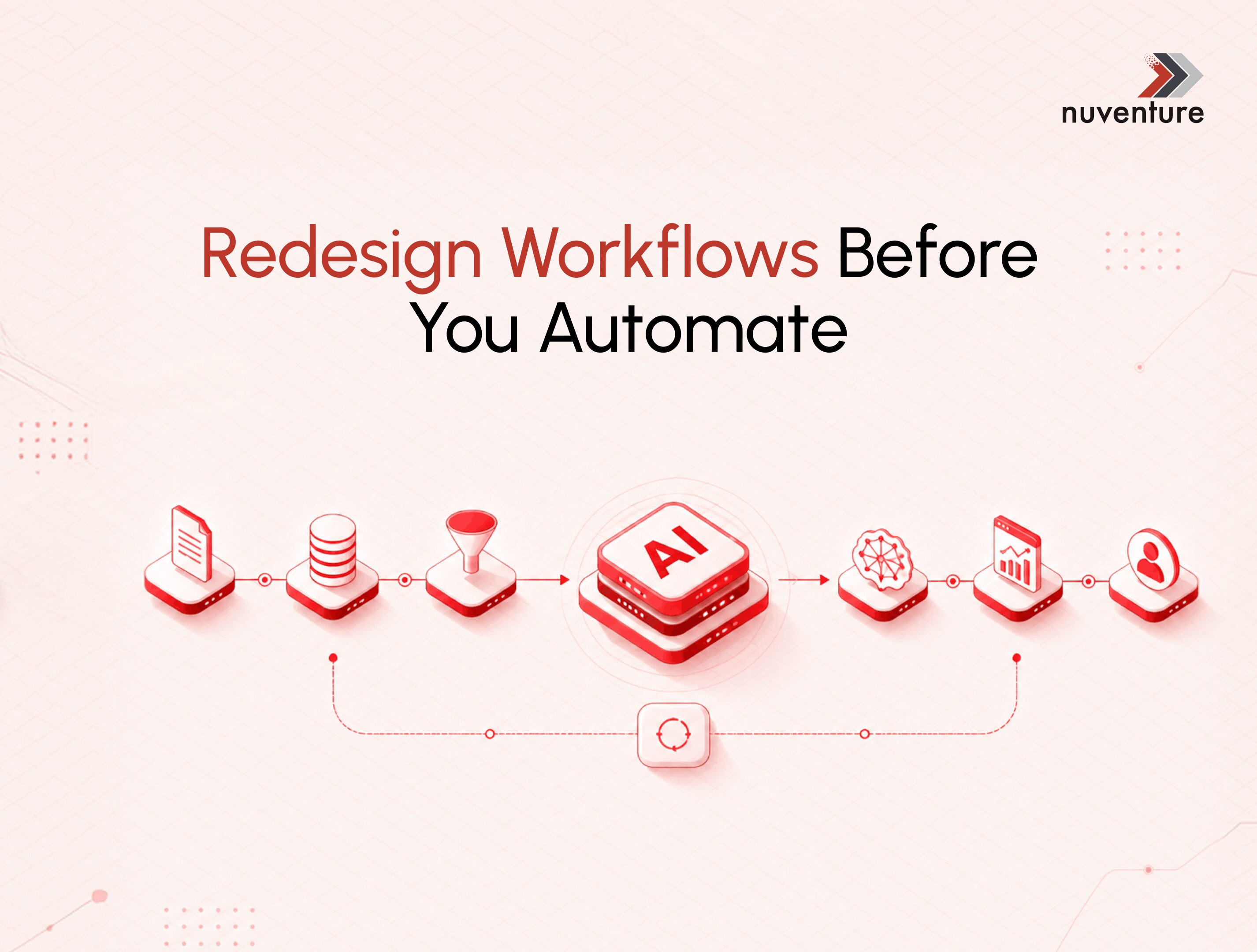
Putting it into practice: the same lesson applies to automation. Many enterprises fall short not because of weak technology, but because of how they implement it. See the four enterprise workflow automation mistakes that are holding organizations back in 2026.
The human element in AI strategy
The history of AI is not just technological. It is also social and ethical. From early concerns about automation to today’s debates about fairness, accountability and transparency, the AI journey has always engaged human values as much as computation.
Technology without trust falters. Industrial transformation must therefore be anchored in ethical frameworks that ensure accountability and inclusivity. That includes workforce reskilling, data governance and equitable access to tools that augment human capability.
Looking forward with informed confidence
Understanding where AI has come from equips leaders to make better decisions about where it is going. Just as early pioneers questioned assumptions and refined their approaches, today’s leaders must treat learning as a strategic capability.
This historical lens also puts current innovation in context. Advances in multimodal AI and human-machine collaboration are not isolated events. They are the result of decades of work, trial and refinement. Recognizing this encourages an outlook that is ambitious but anchored in deep understanding.
The evolution of artificial intelligence is more than a timeline of inventions. It is a story of how humanity creates tools that extend cognition, reshape industries and redefine possibility. By looking back, leaders can anticipate future challenges, spot meaningful patterns and build strategic resilience. The past does not predict the future, but it prepares us for it.
Innovation is not just about adopting technology. It is about understanding its roots, appreciating its cycles and guiding its impact with foresight and responsibility.
Ready to turn AI strategy into results? Explore how our AI development service helps organizations plan, build and scale AI, IoT and cloud solutions with iterative, responsible practices. Connect with our team to get started.