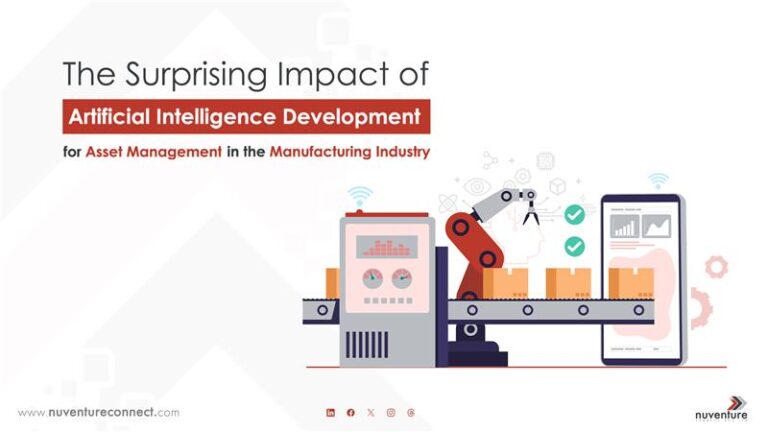
AI in asset management uses machine learning, predictive analytics and data mining to help manufacturers track, maintain and optimize their equipment and inventory. Instead of reacting to breakdowns, manufacturers can predict them, which cuts unplanned downtime and extends asset life.
What was once a futuristic concept is now reshaping how factories operate. Machines no longer just run. With the right data, they signal when they need attention and help teams decide what to do next. In this blog, Nuventure explains how AI is changing asset management in manufacturing, covering the main applications, benefits, challenges and a practical way to get started.
If you are also wondering whether your business is simply using AI tools or genuinely changing how it works, read our take on the gap between AI adoption and AI transformation.
How Is AI Used in Asset Management?
AI brings together machine learning, predictive analytics and data mining to turn asset data into decisions. In manufacturing, three applications deliver the most value: predictive maintenance, real-time asset monitoring and inventory management.
Predictive Maintenance in Manufacturing: The Real Game Changer
Traditionally, manufacturers relied on scheduled maintenance or reacted after something broke. Scheduled maintenance can replace parts that still have life left, while reactive maintenance means unexpected downtime and costly repairs. AI offers a better approach.
Data-driven insights: AI algorithms analyze data from machine sensors and spot patterns that signal when maintenance is needed. With predictive analytics, manufacturers can prevent equipment failure and extend the life of their assets.
Reduced downtime: Addressing issues before they escalate cuts operational downtime and improves productivity and profitability. A stitch in time saves nine, and sometimes more.
Real-Time Asset Monitoring and Performance Optimization
Sensors on machines, production lines and utilities generate a constant stream of data on temperature, vibration, pressure and energy use. AI models learn what normal looks like for each asset and flag deviations early, long before an operator would notice them.
Teams get a live view of asset health across plants. They can compare machines, spot inefficient assets and plan replacements based on evidence instead of age alone.
AI Inventory Management: Optimizing Stock Levels
AI also streamlines inventory management, a critical part of asset management in manufacturing. By learning from demand patterns and usage history, AI helps manufacturers keep the right materials and spare parts available.
Just-in-time inventory: Better forecasting lets companies adopt just-in-time practices that minimize excess stock and reduce holding costs.
Automated reordering: AI-driven systems reorder automatically based on real-time demand and usage, so production lines never stall for lack of materials.
Spare parts planning: Predicting which components are likely to fail helps teams stock critical spares without overstocking.
Benefits of AI in Asset Management for Manufacturers
When AI is built into asset management, the gains show up across operations:
- Less unplanned downtime: Problems are caught before they stop production.
- Lower maintenance costs: Teams repair what needs repair, when it needs it.
- Longer asset life: Early intervention prevents small faults from becoming major damage.
- Better inventory control: Stock levels follow real demand.
- Safer operations: Early warnings reduce the risk of equipment failures on the floor.
- Faster, data-backed decisions: Managers act on live insight instead of delayed reports.
Challenges of Data Integration in AI Asset Management
The benefits are clear, but data integration remains the biggest hurdle. Most manufacturers run a mix of legacy systems and newer technologies, and AI is only as good as the data it receives. Organizations need to address:
- Data silos: Fragmented data systems prevent comprehensive analysis.
- Legacy technology: Older systems often can’t work with modern AI tools.
- Cultural resistance: Employees may worry about job loss or system complexity.
Overcoming these hurdles is vital for success. Whether you are a startup or an established enterprise, the first step is partnering with an AI development company that understands manufacturing. Nuventure has a legacy of transforming industries worldwide and has solved diverse industrial challenges, often exceeding client expectations.
How to Future-Proof Your Manufacturing Operations with AI
Many companies that adopted our digital transformation solutions are already seeing results from AI in asset management. To stay competitive, manufacturers need AI strategies that build resilience and flexibility. Here is how to start:
- Assess your AI readiness. Nuventure’s AI analytics team reviews your requirements to arrive at the AI solution that fits, making the best use of your resources, time and effort.
- Identify gaps and prioritize use cases. Start with one high-impact asset or production line rather than the whole plant.
- Fix your data foundation. Connect, clean and standardize the data from your machines and systems.
- Build a roadmap and run a pilot. Test the approach on a small scale and measure the results.
- Scale what works. Extend proven solutions across lines and sites as your processes become more streamlined and automated.
FAQs
How is AI used in asset management in manufacturing?
AI analyzes sensor and operational data to predict equipment failures, schedule maintenance at the right time, monitor asset health, forecast demand and automate inventory reordering.
What is predictive maintenance in manufacturing?
Predictive maintenance uses AI to analyze machine data and forecast failures, so repairs happen before a breakdown instead of after.
What data does AI need for asset management?
Typically machine sensor readings, maintenance history, production and demand data, and inventory records. The cleaner and better connected the data, the more accurate the predictions.
How can a manufacturer get started with AI in asset management?
Begin with an AI readiness assessment, choose one high-impact asset or process, run a pilot, and scale once it proves its value.
Are you ready to explore AI in your manufacturing operations? Connect with the AI specialists of Nuventure for predictive analytics solutions.